The Month Pneumonia Rewrote My Retirement
For years, retirement lived in my head as a clean transition. Finish strong, downshift, start traveling with a clear plan and an open calendar. What I did not plan for was pneumonia taking five weeks of the timeline I did not have to spare.

Leaving Disney: What I Learned, What Changed, and What I'd Do Again
Last week was my last at The Walt Disney Company. It was a meaningful chapter.Full of complex systems, high creative standards, and people who cared about getting difficult things right.
This is what I learned, what it changed in me, and what I'd do again.

Last Day at Disney Studios: Closing One Chapter, Opening the Next
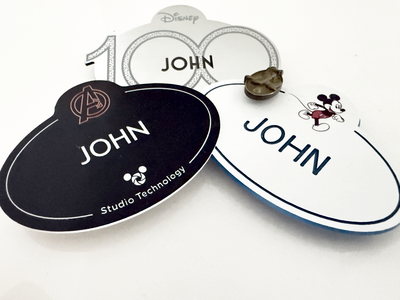
Today was my last day at Disney Studios.
It is hard to summarize a chapter like this in a few paragraphs, but meaningful is the word that keeps coming back. I had the privilege of working with people who care deeply about craft, scale, and getting difficult things right.
The Leader as Decision Maker: Listen, Decide, and Own the Outcome
The Importance of Decisiveness in Leadership
In any organization, from scrappy startups to large enterprises, making decisions is one of a leader's primary responsibilities. Strong leaders do more than set vision. They take action and chart direction. As Peter Drucker observed, successful businesses are built on courageous decisions.
Research consistently shows that effective decision-making is the highest-impact driver of business performance. A leader's job is to break indecision and provide clarity. This doesn't mean being impulsive or autocratic. It means guiding the team through uncertainty by choosing a path and standing by it.

Help! I have a duplicate IP at a remote site!
Duplicate IPs on the same network are one of those things that are never supposed to happen but they never seem to go away. Usually, they are pretty much a non-event, someone can go shout at the user who assigned a static IP to their workstation on a DHCP subnet, the snapshot VM that was just spun up can be shut down, etc.